INF-ACT
One Health Basic and Translational Actions Addressing Unmet Needs on Emerging Infectious Diseases
Budget: € 114,500,000
According to WHO, emerging infectious diseases are classified as "diseases caused by newly-identified or previously unknown pathogens causing public health concerns at the local as well as at the international level". The recent SARS-CoV2 pandemic is a glaring example of how the emergence of a new infectious agent in our globalized society can have devastating effects, also in countries at the forefront in technology, healthcare and monitoring. At the same time, relevant lessons were learned regarding the ability to detect and isolate the pathogen of concern, sequence its genome, monitor the emergence of variants, rapidly define candidate prophylactic and therapeutic strategies and quantify risk and prioritize public health interventions (both pharmaceutical and nonpharmaceutical) with subsequent large-scale production and distribution of diagnostic "in house assays" and commercial kits, PPE and drugs. Also defining and monitoring humoral and T-cellular immune response to both natural infection and vaccination in healthy subjects and different cohorts of patients proved to be of paramount importance for patients management and policy making. This experience has highlighted the response potential and capacity of modern multi-disciplinary scientific research, that is, in turn, strongly dependent on the acquisition of ever broader and in-depth knowledge on host-pathogen interaction mechanisms involving both the microbial agent, the vector and/or the animal reservoir, and the human host in an operational "one health" approach within their reciprocal relationships with the reference ecosystems. This is particularly relevant considering that most emerging infectious diseases are zoonotic, occurring at the human-animal-environmental interface, and linked to inter-species "spill-over" events. Such change of paradigm from a man-centered approach to a comprehensive vision constitutes the main guideline along which the research efforts should be directed to increase preparedness, readiness and response capacity of health systems, and ultimately the resilience and resistance of countries, against epidemic and pandemic events.
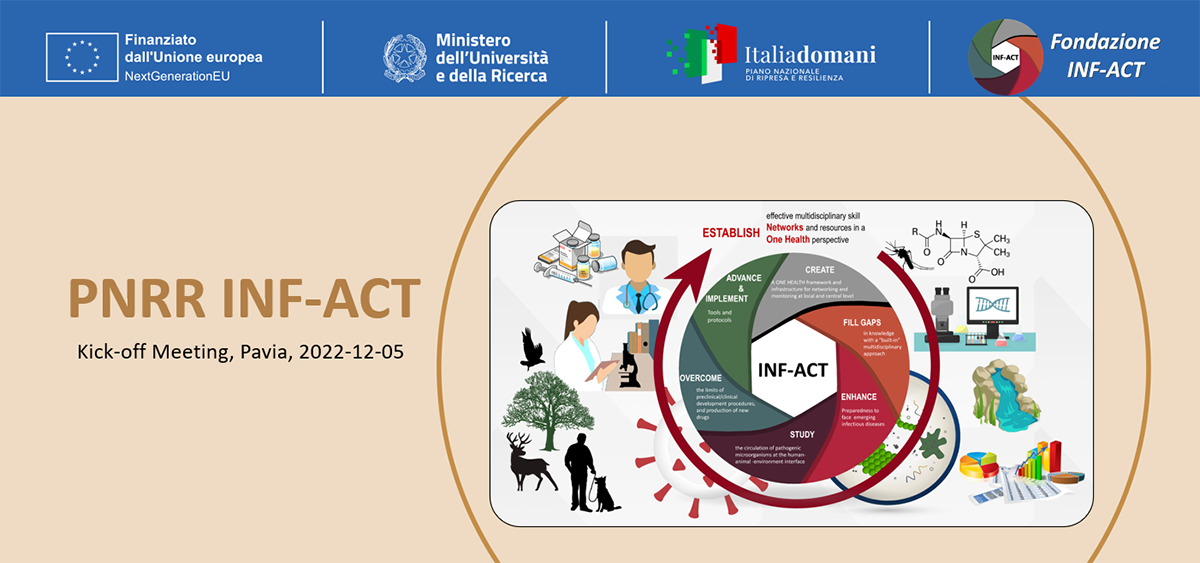
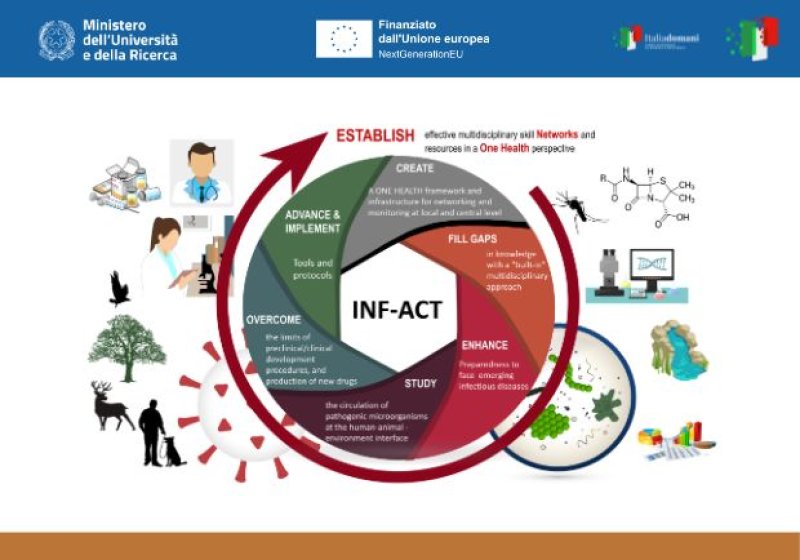
The INF-ACT research program addresses pressing unmet needs of human emerging infectious diseases in both fundamental as well as in translational aspects, taking into consideration human health in a wider context including domestic and wild animals as potential disease reservoirs and environmental factors enhancing the possibility for spillover (One Health approach). The project is focused on five research nodes. Three "vertical" research nodes address different research themes:
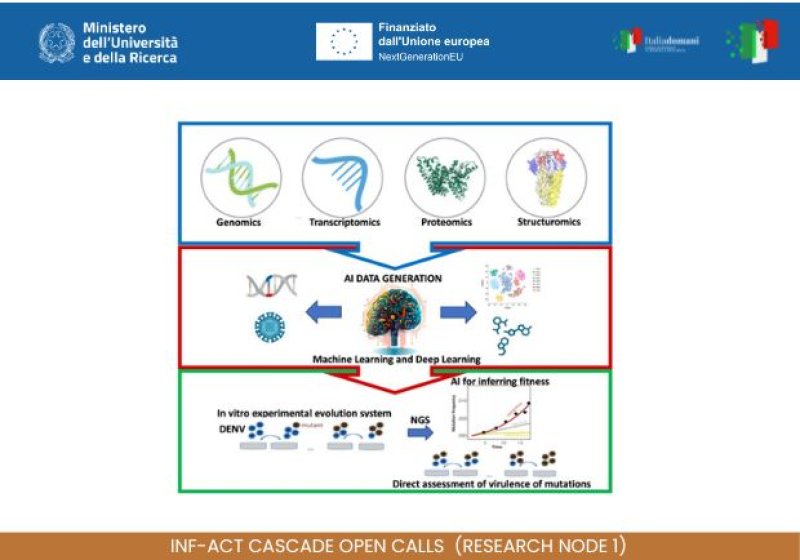
- Emerging and re-emerging viral diseases (with a focus on respiratory viruses and zoonotic viruses);
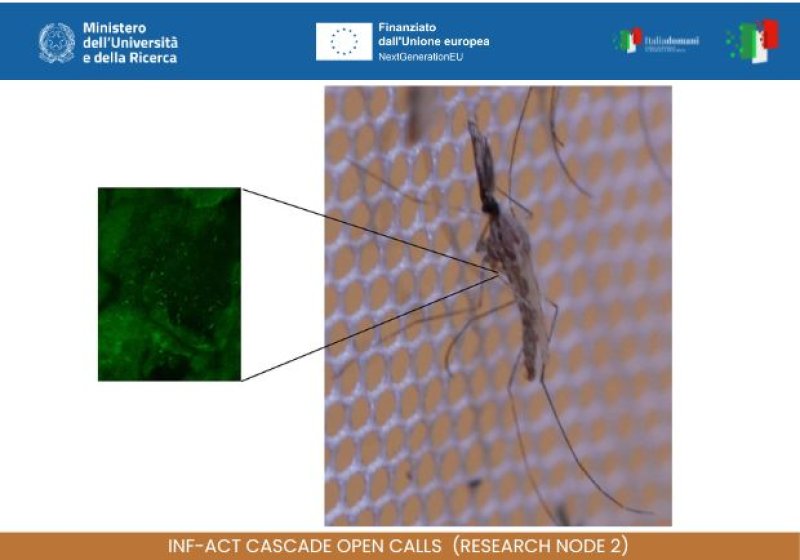
- Arthropod vectors and vector-borne pathogens (with a focus on VBDs most at risk of expand or emerge in Italy, such as arboviruses);
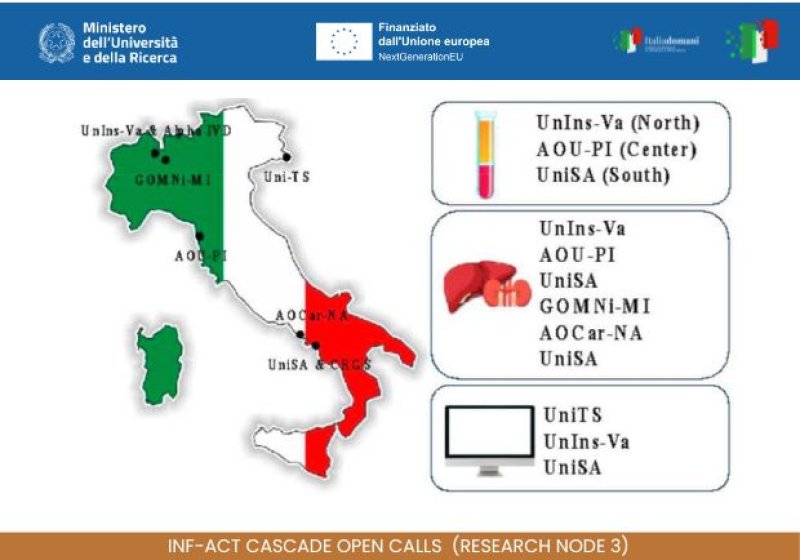
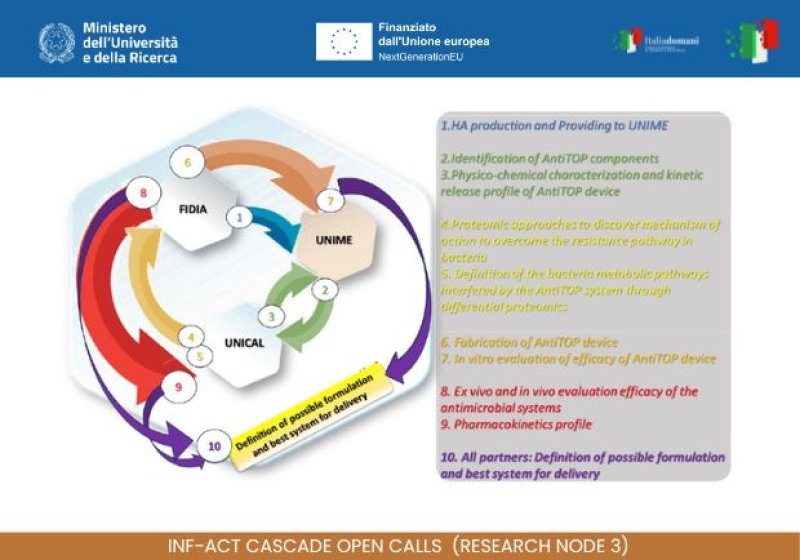
- Diseases sustained by bacteria and fungi resistant to multiple antibiotics (AMR, with a focus on the molecular mechanisms of MDR).
In addition, two transversal Research Nodes will bi-directionally interact with the basic and translational activities of the three major Research Nodes, in order to blend the high-profile skills recruited in the project:
- Integrated one health epidemiology (man, animal and man-animal), monitoring and mathematical models;
- Development of new therapeutic treatment strategies (identification of molecular targets, generation of small molecule libraries for drug discovery, testing of lead compounds and their optimization).
The Research Program was funded under the National Recovery and Resilience Plan (NRRP), Mission 4 Component 2 Investment 1.3 Extended Partnership - Call for tender No. 341 of 15 March 2022 of Italian Ministry of University and Research funded by the European Union - NextGenerationEU; Project code PE00000007, Concession Decree No. 1554 of 11 October 2022 adopted by the Italian Ministry of University and Research, Project title "One Health Basic and Translational Actions Addressing Unmet Needs on Emerging Infectious Diseases (INF-ACT)".
Institutions involved
































































Related activities



Researchers involved

Fausto Baldanti
Research Node 1 Leader
Università degli Studi di Pavia
Fausto Baldanti is a Full Professor of Microbiology and Clinical Microbiology at the Department of Clinical Surgical, Diagnostic, and Pediatric Sciences of the University of Pavia (since 01/02/2023). He serves as the Director of the Department of Diagnostic Services and Imaging at the IRCCS Policlinico San Matteo Foundation, Pavia (since 09/2022) and is the Director of the Complex Structure of Microbiology and Virology at the IRCCS Policlinico San Matteo Foundation, Pavia (since 01/09/2022).
Since May 2, 2017, he has been the Director of the Specialization School in Microbiology and Virology at the University of Pavia, open to both medical and non-medical graduates. In 2004, he obtained the Specialization in Microbiology and Virology with a score of 70/70 with honors from the University of Padua. In 1995, he achieved the Specialization in Infectious Diseases with a score of 50/50 with honors from the University of Pavia.
Professor Baldanti is a co-author of over 500 papers published in international scientific journals indexed in Medline, the majority of which as the first, last, or corresponding author (Scopus). He has also contributed to 4 chapters, 3 in English-language texts and 1 in an Italian-language text. His H-index is 66 (Scopus), with a total of 18,418 citations (Scopus).

Alessandra Della Torre
Research Node 2 Leader
Università degli Studi di Roma La Sapienza
Alessandra della Torre is Professor of Parasitology in the Department of Public Health and Infectious Disease. She leads the Medical Entomology group which is focused on arthropod vectors of human and zoonotic diseases, with particular reference to Aedes invasive mosquito species vector of exotic arboviruses in Europe and Afro-topical malaria vectors.
The research projects integrate genomic, molecular, cytogenetic, ecological and behavioural approaches to laboratory and field activities, in collaboration with research groups in Europe, USA and Australia - in order to characterize the biology of Aedes albopictus and other Aedes Invasive species in temperate regions - and in Africa, Europe, USA - to better characterize the dynamics of malaria transmission.
The newly acquired knowledge is exploited to optimize mosquito vector’s surveillance and control approaches.
She received support by WHO-TDR, the FP7 and H2020 European funding schemes, National Institute of Health (NIH-USA) and Istituto Pasteur Italia-Fondazione Cenci Bolognetti, coordinated the H2020 Aedes Invasive Mosquito COST Action (AIM-COST) gathering research groups from 37 European countries, and is a member of the Inter-sectorial Task Force on Vector Borne Diseases of the Italian Ministry of Health.
She published 155 papers in peer-reviewed Journals (H-index=49).

Stefania Stefani
Research Node 3 Leader
Unviersità degli Studi di Catania
Stefania Stefani is full professor of Microbiology and Clinical Microbiology and head of the laboratory of Medical Molecular Microbiology and Antibiotic Resistance (MMAR) at the BIOMETEC and at the Policlinico University Hospital at the University of Catania, Italy. She is currently President of the Italian Society of Microbiology (SIM).
Her scientific activity is mainly related to several aspect of antibiotic resistance: from molecular mechanisms and epidemiology to genome studies and characterization of mobile elements carrying resistance genes.
Stefania Stefani has held several positions at the Italian Minister of Health: She is member of the OPERA commission in AIFA (until 2023). She is in the Board of the network of Clinical Microbiology Lab organized by AGENAS and AIFA (2023).
She is also involved in the Scientific Board of the European Society of clinical Micro and ID (ESCMID), the Italian Society of Clinical Microbiology (AMCLI) and of the Italian Society of antimicrobial Therapy (SITA) and stewardship (GISA).
She is Editor in Chief of the Journal of Global Antimicrobial Resistance (JGAR) since 2012 and Editor and reviewer for many other microbiology and ID journals.

Anna Teresa Palamara
Research Node 4 Leader
Istituto Superiore di Sanità
Anna Teresa Palamara is the Director of the Department of Infectious Diseases at the Istituto Superiore di Sanità and Full Professor of Microbiology and Clinical Microbiology at Sapienza University of Rome. She graduated with honours in Medicine and Surgery at Università Cattolica del Sacro Cuore. During her specialization in Dermatology and Venereology, she began her research activity focusing on infectious diseases. Author of more than 200 publications in peer-review journals and more than 600 technical documents, (H-index: 48; Total Citations: 7550), during her career, Prof. Palamara extended and consolidated her expertise on Microbiology, Infectious Diseases, Public Health and complex systems management, participating in multidisciplinary teams of experts, and collaborating with national and international agencies, included the Italian Ministry of Health, ECDC, and WHO. From 2013 to 2019, she has been President of the SIM, promoting educational and scientific activities. During pandemic, she contributed to the coordination of COVID-19 integrated and SARS-CoV-2-variants surveillances and served as scientific advisor of the COVID-19-Task Force of Sapienza University of Rome. From 2022 is a member of Technical-Healthcare Committee of the Ministry of Health (Section L). From 2023, Prof. Palamara servs as a member of the working group on AMR, the Board Governance of the Microbiology Network (AGENAS), and as ISS representative in the Steering Committee of the PNCAR 2022-2025.

Giovanni Maga
Research Node 5 Leader
Consiglio Nazionale delle Ricerche
Biologist. CNR Research Director, head of the Laboratory of DNA Enzymology and Molecular Virology of the CNR Institute of Molecular Genetics in Pavia and Director of the CNR Department of Biomedical Sciences. Topics: Genome replication and repair in human cells and viruses. Development of antivirals. Author of 277 publications, H-index 54 (Scopus)
Video
News and events