Cascade Open Call RN2: SYMPATHRY
Decrypting the symbionts-vectors-pathogens trilogy: new efficient tools for monitoring and control
Budget: € 1,673,884
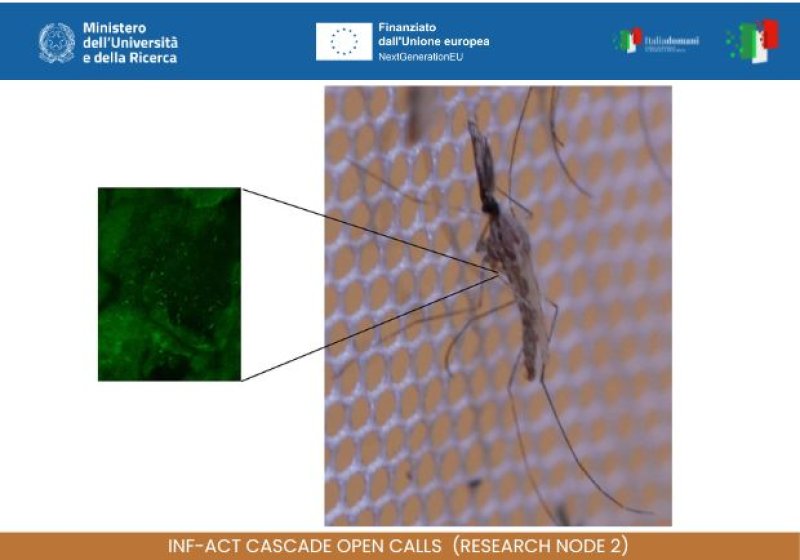
The project aims to deepen understanding of microbiota-vector interactions in phenomena related to: i) environmental adaptation, ii) insecticide resistance, iii) vectorial capacity of mosquitoes and iv) to fill the gap in current knowledge of the microbiota of sandslies. Both are vectors of several pathogenic viruses (Dengue, Chikungunya, Zika, West Nile, Usutu). Global warming, extreme weather events and urbanization are favouring the spread of invasive mosquito species such as Aedes albopictus, Aedes koreicus and Aedes japonicus. Resistance to synthetic pyrethroids has recently been reported in Ae. albopictus populations across southern Europe.
Vector microbiota likely influence multiple aspects of host biology, including vector competence, insecticide resistance and thermal adaptation; stable bacterial symbiosis is being used as an innovative mosquito control tool. Planned activities of the project include:
- Mosquito and sandfly collection in Italy during the 2024 and 2025 warm seasons, with data on geographical coordinates/climatic variables
- Morphological/molecular identification of vector species/strains and eventual vector borne pathogens
- Metagenomic/pathobiomic analyses of mosquito microbiota in relation to recorded variables, host specificity and microbial competition within specific microbiota (Asaia/ Wolbachia)
- Laboratory manipulation of invasive mosquito species under varying temperatures and co-infection with pathogens to evaluate the contribution of symbionts to thermal adaptation and vectorial capacity
- Field trials with a "Wolbachia-based approach" for mosquito control
Institutions involved



News and events