Cascade Open Call RN3: SEPSOT-CODE
Rapid prediction and diagnosis of SEPsis in Solid Organ Transplant: The Italian national initiative for an interactive risk-stratification and Cost-optimization Online DatabasE
Budget: € 2,782,756
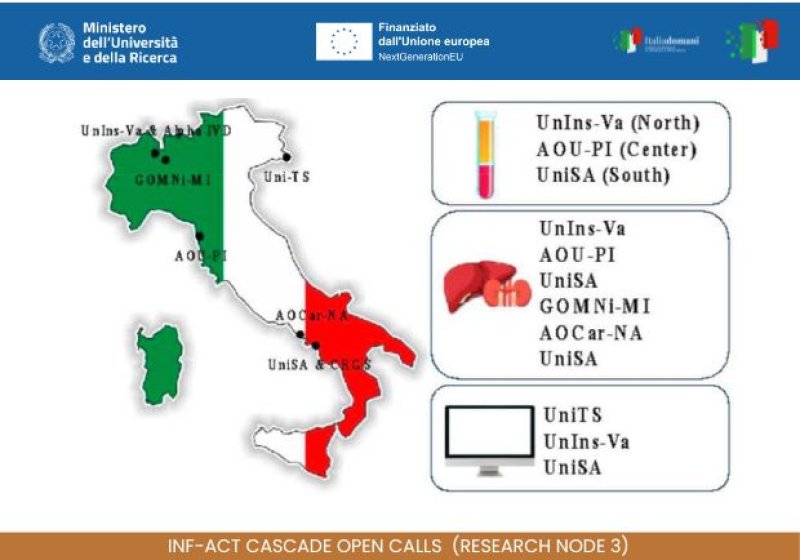
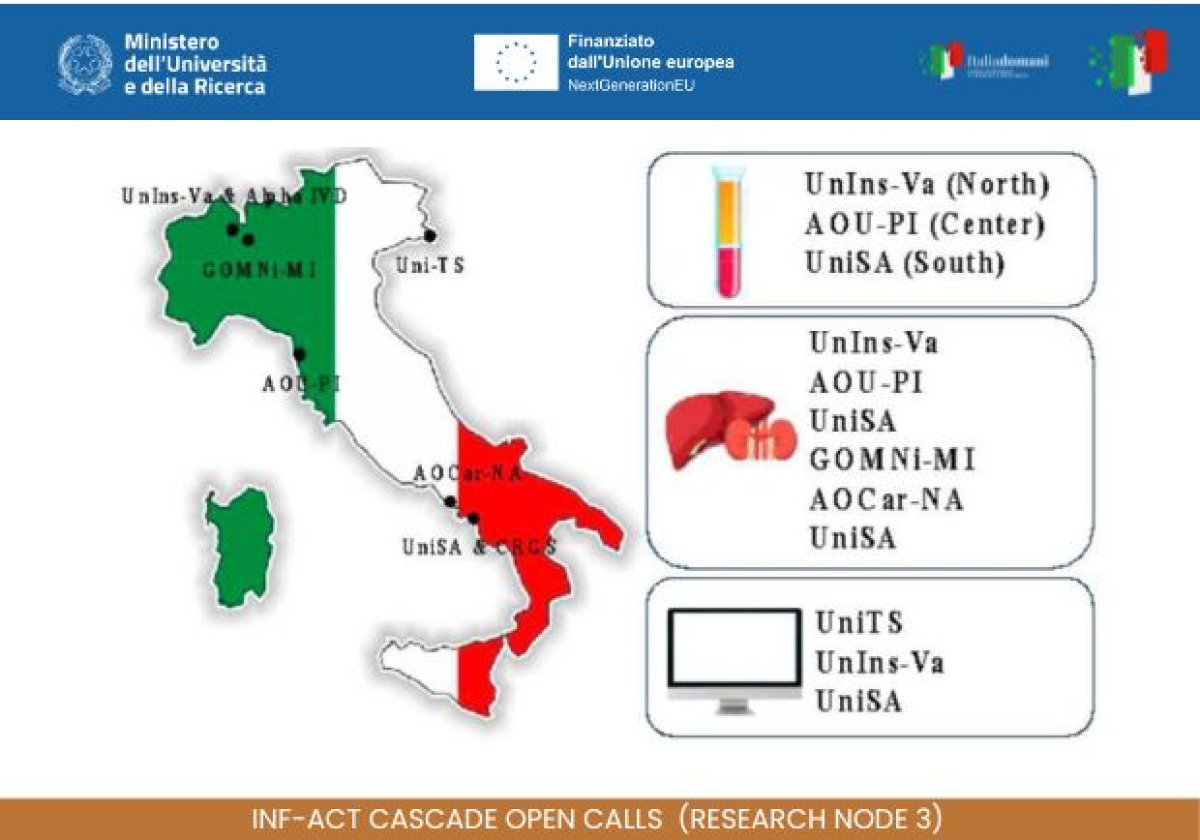
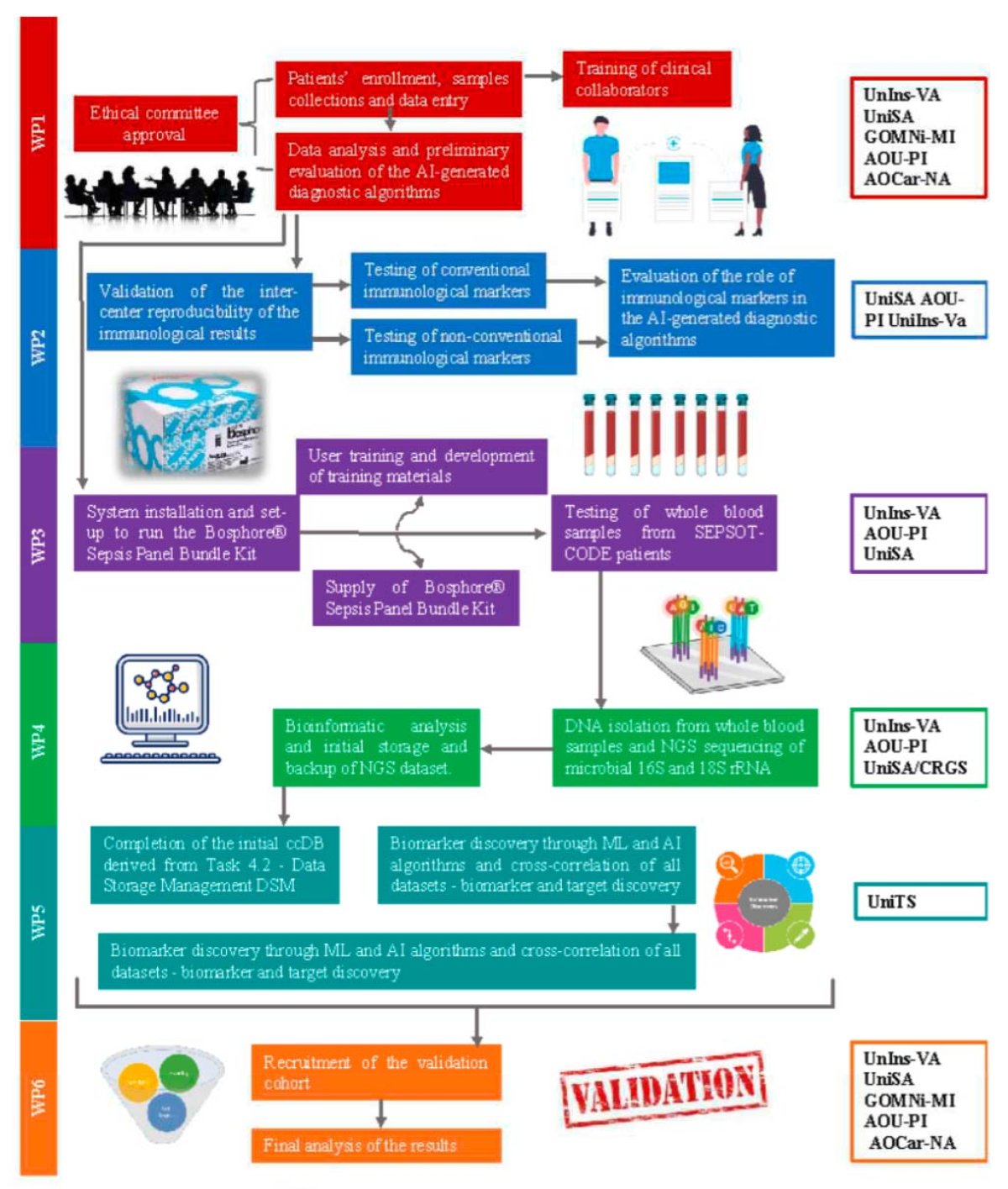
Sepsis is one of the most feared complications of solid organ transplant (SOT), dramatically influencing its outcome. The available markers are often poor, making the definition of a reliable and timely diagnostic flow-chart a still unmet medical need. SEPSOT-CODE propose to create an interactive artificial intelligence (AI)-based database and predictive algorithm using a panel of clinical, conventional and non-conventional microbiological and immunological parameters from SOT patients and donors. Five major Italian SOT centers are included with more than 500 transplants expected. All patients with suspected sepsis will be followed using conventional clinical and laboratory parameters and with a direct-from-blood CE-IVD-marked molecular microbiological assay. A 16S/18S-based Next-Generation Sequencing protocol will also be performed on whole blood together with a broad panel of immunological markers. A collective database of all datasets (clinical, immunological and microbiological) will be created and analyzed by cutting-edge bioinformatic and machine-learning (ML) pipelines by high -performance-computing (HPC). A discovery cohort will also be recruited in the last six months of the project to strengthen the obtained results. To ease and prompt the clinical use, an interactive and userfriendly interface will be developed leveraging the state-of-the-art ML and AI techniques. The impact of the study could be manifold including:
- a better infectious screening of donors
- a better risk stratification of sepsis in SOT patients
- the optimization of diagnostic resources through the identification of cases which could mostly benefit of the more expensive direct-from-blood molecular assays
Institutions involved






Image gallery
News and events