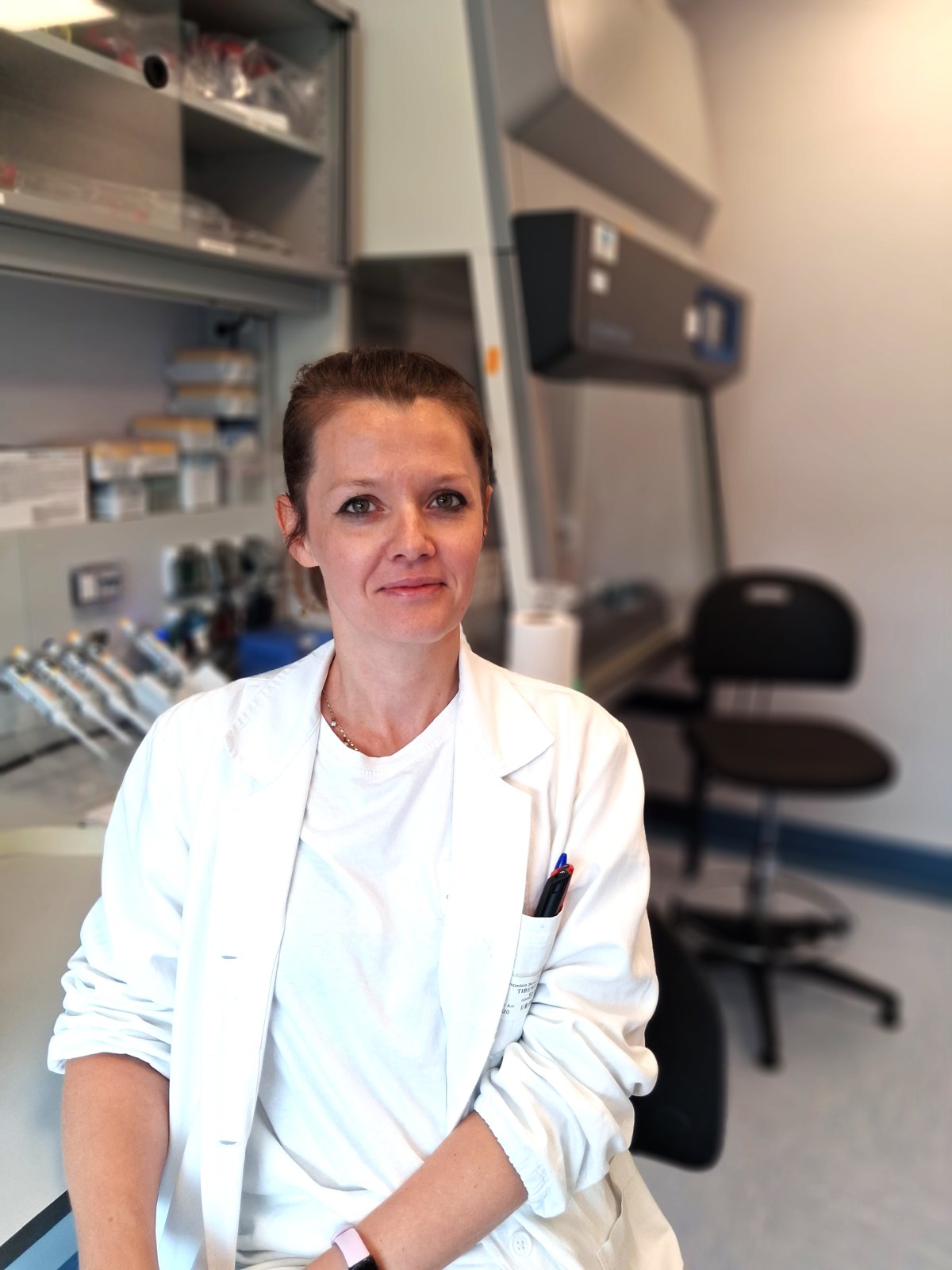
Two years ago, Natalia Tiberti, a researcher at the Department of Infectious, Tropical Diseases and Microbiology at IRCCS Sacro Cuore Don Calabria Hospital (Negrar di Valpolicella, Verona), received the Mid Career Award, funded by the INF-ACT Foundation in collaboration with the Armenise-Harvard Foundation. The funded project was, and still is, aimed at identifying new biomarkers to contribute to the early diagnosis of acute fevers caused by arboviruses, such as West Nile virus and Dengue virus.
Let’s take a step back and summarize the project you are working on
In Italy, acute fevers caused by arboviruses are being reported with increasing frequency. They are becoming more common, but they are also difficult for general practitioners and emergency department physicians in hospitals not specialized in infectious diseases to diagnose. Such diagnostic difficulty often results in treatment with broad-spectrum antibiotics, which are ineffective against the underlying causes. Hence the need to improve diagnostic capabilities, given the recent increase in the frequency of West Nile cases and outbreaks caused by Dengue and Chikungunya.
What aspects are you focusing on?
In our laboratory, we are working along two main lines of research. The first, more traditional approach, focuses on studying inflammatory markers. By identifying which markers are altered following arbovirus-related fevers, it is possible to narrow down the diagnosis and, where appropriate, refer the patient to specialized hospitals.
The second, more innovative approach, focuses on extracellular vesicles that are released into the bloodstream during infection. Together with my collaborators, we are identifying the specific molecules present on their surface while also studying the biological material contained within them. Our goal is to identify new biomarkers, but also to better understand the molecular mechanisms underlying our body’s response to different causes of acute fever.
Why are you pursuing two lines of research?
The first is based on more established evidence and could potentially lead to a predictive model that would be easier to “transfer into the doctor’s office.”
We have already identified groups of highly promising markers capable of distinguishing arbovirus infections from other types of fever. In practice, this represents a biological signature that can guide physicians toward an early diagnosis, enabling more accurate monitoring of the epidemiology of these infections in the local area and, consequently, helping to contain outbreaks. It could also contribute to reducing the inappropriate use of antibiotics.
The second approach is more innovative but also more complex, as it requires sophisticated instruments to study very small biological components. At present, we have carried out a methodological investigation to determine the best way to study extracellular vesicles in our samples, and we are now examining how they are altered in response to fevers caused by different conditions.
What will the next steps be?
The first line of research, focusing on inflammatory markers, has already been tested in small cohorts with very encouraging results. The next step will be to move to larger cohorts in order to confirm the findings obtained so far. The second line of research is particularly complex and requires time and highly specialized equipment. In the coming months, we will continue our laboratory investigations in order to build a solid body of evidence that could, in the future, pave the way for simplified and accessible diagnostic tools.
What advantages did winning the Mid Career Award give you?
First of all, it accelerated the work being carried out in the laboratory, as we were able to double the number of collaborators, from two to four people. Secondly, it enabled me to attract new funding and therefore further expand my research. In addition, it is a flexible grant, which has allowed us to adapt and evolve the project in response to current developments.
Can you explain in more detail what happened?
In the summer of 2025, an outbreak of locally acquired Chikungunya occurred in the province of Verona, with around fifty confirmed cases. This gave us access to real-time data and biological samples, which are extremely valuable for the work we are carrying out. The flexibility of the Mid Career Award allowed us to reshape the project in response to this unexpected opportunity, analyzing samples from the ongoing epidemic and thereby strengthening our study.
Image gallery